
The Morning It Won't Budge
You hit the opener button on your way out and nothing happens—or worse, the door groans, shudders, and rises an inch before stalling. Sometimes you can see the problem right away: a thin skin of ice gluing the bottom weatherstripping to the concrete slab. Other times the door just feels heavy and slow, like it's fighting you the whole way up, even though it worked fine last week. Both are common complaints once Robertson County gets its first real cold snap, especially after a night of rain followed by a freeze. Garages here aren't usually heated, and many sit low enough that runoff pools right at the threshold before it ices over.
The good news: most of these issues have a clear cause and a straightforward fix. Here's the order a technician actually works through when a door is frozen or sluggish in cold weather.
What Gets Checked First, and Why
1. Ice Bonding the Bottom Seal to the Floor
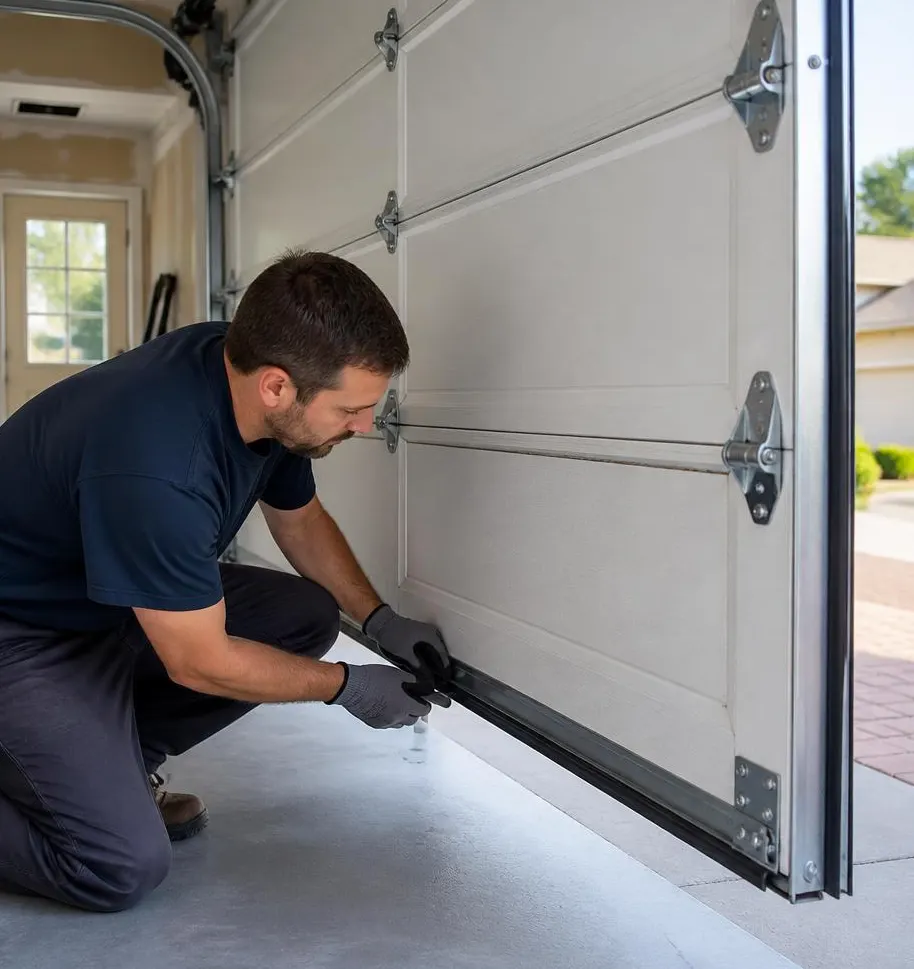
This is the first thing to rule out because it's the most common and the easiest to misdiagnose as a motor problem. Water from rain or melting frost runs under the door, settles against the slab, and freezes overnight. The rubber weatherstripping along the bottom of the door bonds to that ice like a popsicle stick to a tray.
If you force the opener repeatedly, you risk stripping the drive gear or snapping the belt or chain, so that's not the move. The fix is simple: break the ice seal by hand first. A heat gun on low, a hair dryer, or even warm (not boiling) water poured along the seal will loosen it in a few minutes. Once the door is free, check whether the slab slopes enough to drain, and consider a new bottom seal if the old one is cracked and trapping extra water against the concrete.
2. Thickened or Dried-Out Lubricant on Tracks and Rollers
If there's no ice and the door still moves like it's dragging, the next check is lubrication. Standard grease and old, dried-out lubricant both stiffen up in cold temperatures, and rollers that were already a little worn from summer humidity and pollen buildup will bind even more once it's cold. You'll usually hear it before you see it—a grinding or squealing sound as the door travels, worse at the start of the run.
The fix here is cleaning the tracks of old grime and reapplying a lubricant rated for cold weather, not a heavy all-purpose grease that turns gummy below freezing. Nylon rollers can also be swapped for ones rated for a wider temperature range if this becomes a recurring issue.
3. Springs Losing Tension in the Cold
Steel contracts slightly as temperatures drop, and torsion or extension springs that are already near the end of their lifespan can lose just enough tension in cold weather to make the door feel noticeably heavier. You'll notice this most if the door struggles more in the morning than it does by afternoon once things warm up a few degrees, or if the opener strains and makes a louder motor sound than usual.
This isn't a DIY adjustment—garage door springs store a dangerous amount of tension, and misjudging a winter-stiffened spring is how people get hurt. A technician checks the door's balance by disconnecting the opener and testing whether the door holds its position halfway up. If it drifts down, the spring is due for adjustment or replacement.
4. Opener Settings and Internal Gearing
If the seal is clear, the tracks are clean, and the springs check out balanced, the opener itself is next. Cold air thickens the lubricant inside the opener's gearbox, and a chain or belt that was set to the correct tension in summer heat can read as slightly too tight once metal parts contract in winter. The opener's force settings—how hard it pushes before assuming something is blocking the door—sometimes need a small recalibration for the season, especially on older units.
This is usually a quick in-garage adjustment: resetting force limits and checking the drive mechanism for wear, rather than a full opener replacement, unless the unit is already old enough that cold weather is just exposing problems that were coming anyway.
5. Panel Warping from Moisture
Less common, but worth checking on older wood or wood-composite doors: panels that swelled during a humid summer and heavy rain season can warp slightly, then bind in the tracks once cold weather sets in and the wood contracts unevenly. If the door only sticks at one specific point in its travel, every time, this is worth a look—especially on doors that get direct exposure to rain and moisture from nearby pine trees.
When to Call Springfield Garage Door
If you've cleared the ice and the door still won't move smoothly, or if it's noticeably heavier than it used to be, that's your cue to stop troubleshooting and call. Springfield Garage Door handles both quick seasonal fixes—like garage door maintenance visits that clean and re-lubricate tracks and rollers before the next cold snap—and the jobs that need a trained hand, like spring replacement when tension has dropped enough to strain the opener. A technician can also tell you whether it's the bottom seal, the balance, or the opener itself causing the drag, instead of you guessing and risking a bigger repair.
If your garage door is fighting you every cold morning this season, call Springfield Garage Door. We serve Springfield, Greenbrier, White House, Cross Plains, Coopertown, Orlinda, Portland, and Millersville, and we'll get your door moving the way it should before the next ice storm rolls through.